Pick up a tomato in August at a farmstand in Scarborough. It's warm from the sun, heavy, and smells like the vine it came off two hours ago. Now think about the tomato you bought in February — pale, firm, ripened in a distribution warehouse somewhere in Florida or Mexico, built for travel rather than flavor. They share a name and almost nothing else. This is what seasonality actually means: not a restaurant buzzword, but the basic fact that food tastes like something when it's ready, and significantly less when it isn't.
In Maine and New Hampshire, the window of "ready" is compressed and intense. Spring is brief. Summer is generous. Fall is brilliant. Knowing what's actually coming off the ground right now — and where to get it — is the single most useful thing a chef or home cook in the region can know.
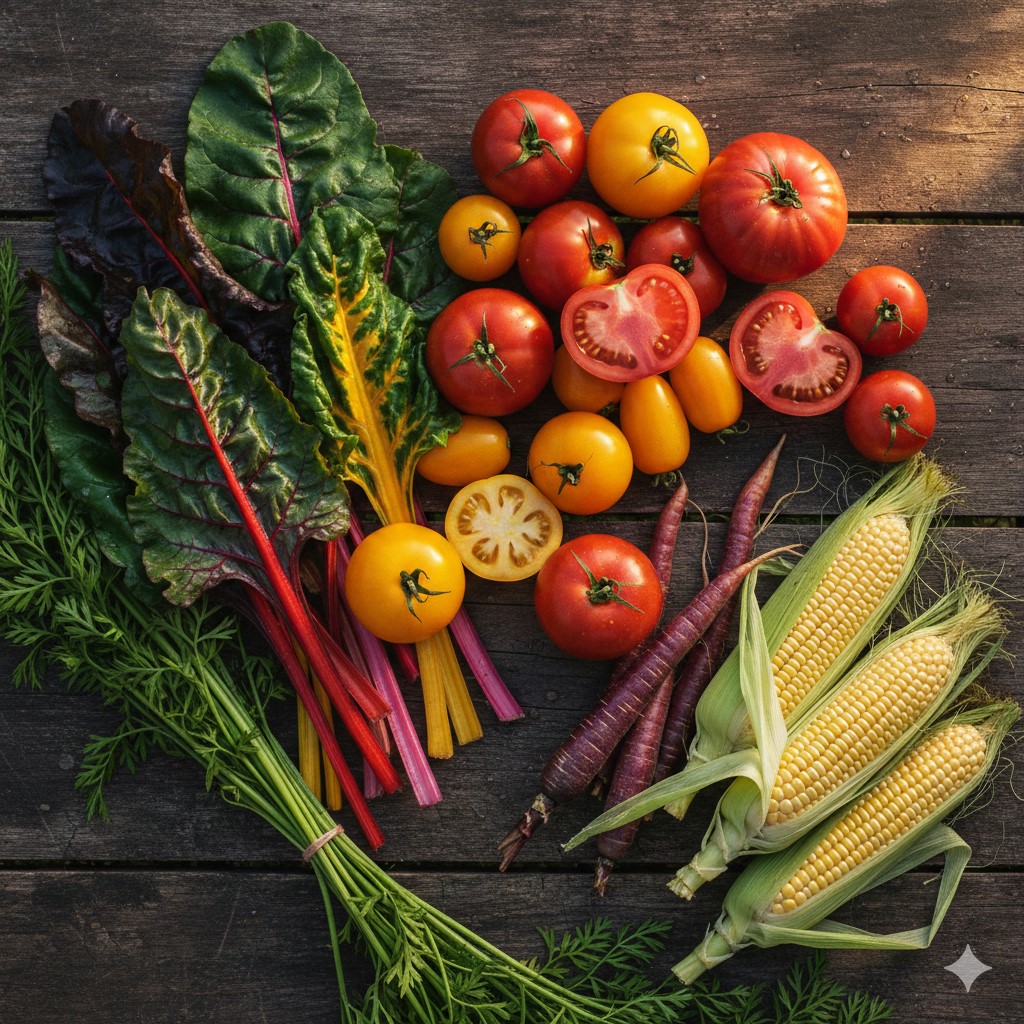
Video moment: farmer carrying a full crate of produce from the field — color, variety, and abundance visible in a single shot.
Why Seasonal Eating Is Actually Better
There are three concrete reasons seasonal, local produce outperforms out-of-season produce. None of them are abstract.
Flavor
Produce destined for long-distance shipping gets picked before it's ripe, then ripened artificially — often with ethylene gas — during transport. The sugars, acids, and aromatic compounds that develop in the final days on the plant — the ones that make a strawberry taste like a strawberry — never fully form. When you pick something at peak ripeness within miles of where it'll be eaten, you get the full expression of the fruit or vegetable. There is no substitute for this chemistry, and no amount of supply-chain management that recreates it.
Nutrition
Many vitamins and antioxidants begin degrading the moment a plant is harvested. Vitamin C in spinach can drop significantly within a week of harvest when stored improperly in transit. Folate, B vitamins, and certain antioxidants follow a similar curve. Produce sourced locally and used within 24–48 hours of harvest retains far more of what makes it nutritionally meaningful.
Price
When something is abundant — when a farm has more zucchini than they can move in a week, or the blueberry crop comes in heavy — the price drops. Seasonal buying means purchasing at the top of the supply curve, not paying scarcity pricing for ingredients shipped across the country out of season. For a chef managing food cost percentages, the difference is measurable every week.
"I don't start with a recipe and go looking for ingredients. I find out what's at peak and build backward. The menu almost writes itself." — A LiveStalks chef partner, Southern Maine
The Maine & New Hampshire Seasonal Calendar
Every farm's timing varies by microclimate, elevation, and variety. The table below is a reliable regional guide — use it to anticipate what's coming and plan accordingly.
| Spring (Apr–Jun) | Summer (Jul–Aug) | Fall (Sep–Nov) | Winter (Dec–Mar) |
|---|---|---|---|
| Asparagus | Wild Maine blueberries | Apples | Root vegetables (stored) |
| Fiddlehead ferns | Tomatoes | Winter squash & pumpkin | Potatoes & turnips |
| Spinach & arugula | Sweet corn | Kale & Swiss chard | Microgreens (greenhouse) |
| Radishes | Zucchini & summer squash | Brussels sprouts | Mushrooms (cultivated) |
| Spring peas | Green beans | Cauliflower | Dried beans & grains |
| Rhubarb | Cucumbers | Cranberries (coastal ME) | Cold-storage apples |
| Spring onions & scallions | Basil & summer herbs | Beets & parsnips | Maple syrup (early spring) |
| Strawberries (late Jun) | Eggplant & peppers | Pears | — |
| Maple syrup (tails off) | Beets | Sweet potatoes (NH) | — |
Timing varies by farm, microclimate, and year. Check real-time listings on the LiveStalks marketplace for what's available today.
A few Maine & NH specialties worth knowing:
Fiddlehead ferns — harvested for only a few weeks in May in Maine's river valleys. Sauté in butter with garlic; add to pasta; pickle them for the rest of the year. They're not available any other time, anywhere else in the world at this price. If you've never put them on a menu, this is the year to start.
Wild Maine blueberries — smaller and more intensely flavored than cultivated varieties, with a tartness that disappears when cooked into a sauce or reduction. Peak season is August. They freeze beautifully, so stocking up at peak gives you the flavor year-round, but fresh off the barrens in summer is genuinely different.
Maple syrup — technically an early spring product (sap runs February through April), but Maine and NH producers make some of the best in the country. Available year-round from local farms, and useful for far more than breakfast — glazes, brines, vinaigrettes, dessert sauces. The terroir from one farm's maple is different from another's.
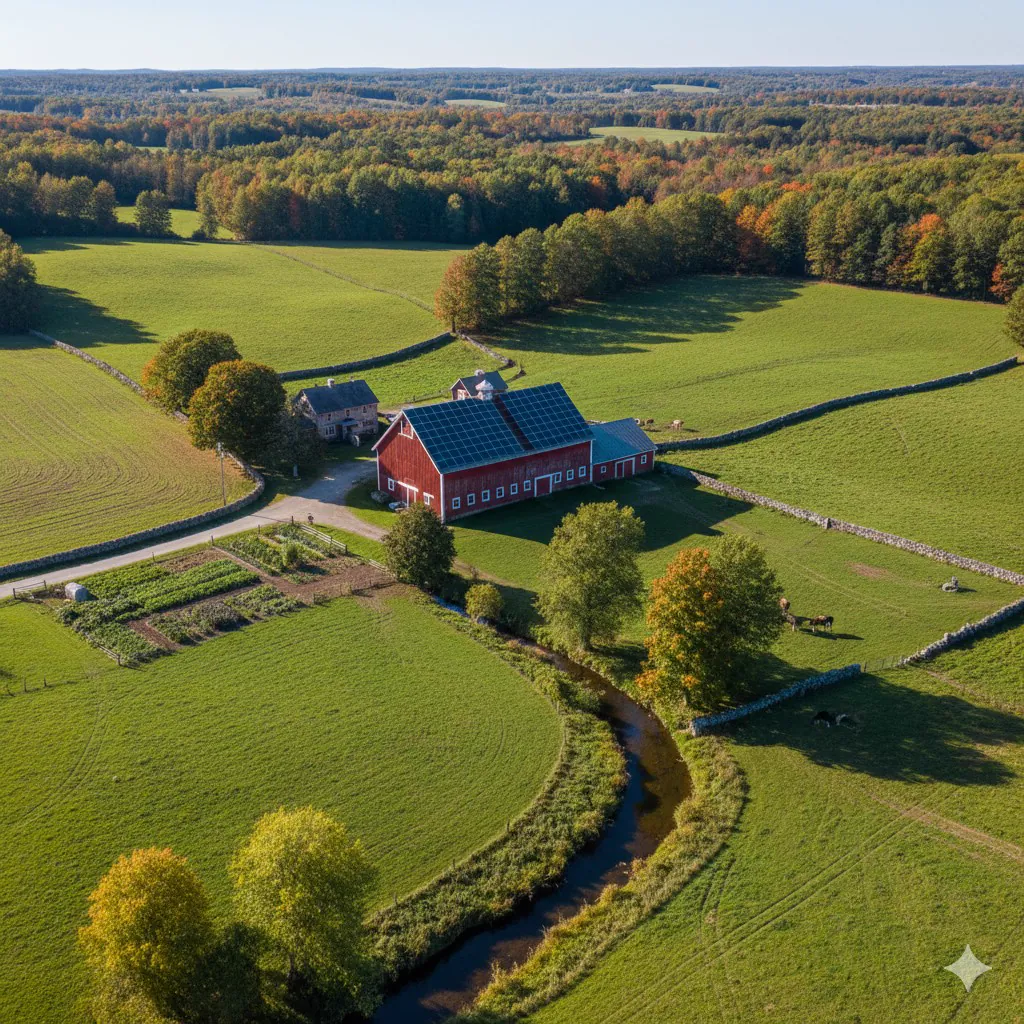
Video moment: aerial of a Maine farm field through the seasons — bare ground to green rows to fall harvest colors.
How Chefs Build Menus Around Seasonality
The practical challenge of seasonal menu planning is uncertainty. You don't know exactly when the tomatoes will be ready or whether the corn will hit before the Saturday dinner service. That uncertainty is also the source of the food's value — you can't schedule your way to a vine-ripened tomato.
The chefs who do this well share a few habits:
They shop before they plan. Instead of writing a menu and then sourcing ingredients, they find out what's available first and let that shape the menu. A farm call on Monday means a different specials board by Thursday — and the food is better for it.
They build flexible foundations. A base technique, a plating approach, a sauce format that works with whatever's at peak — then the produce rotates through. A chef who knows how to handle brassicas six ways can run a different special every week from September through November without breaking a sweat.
They make seasonality visible. "Available through August only" creates genuine urgency. A specials board that changes weekly signals freshness without any marketing copy required. Guests notice, remember, and come back specifically to see what's different.
They communicate upstream. The best chef-farm relationships are dialogues, not purchase orders. A chef who tells a farmer "I'll need 40 lbs of dry beans in October" in July is a partner, not a customer. That farmer plants accordingly. Both win.
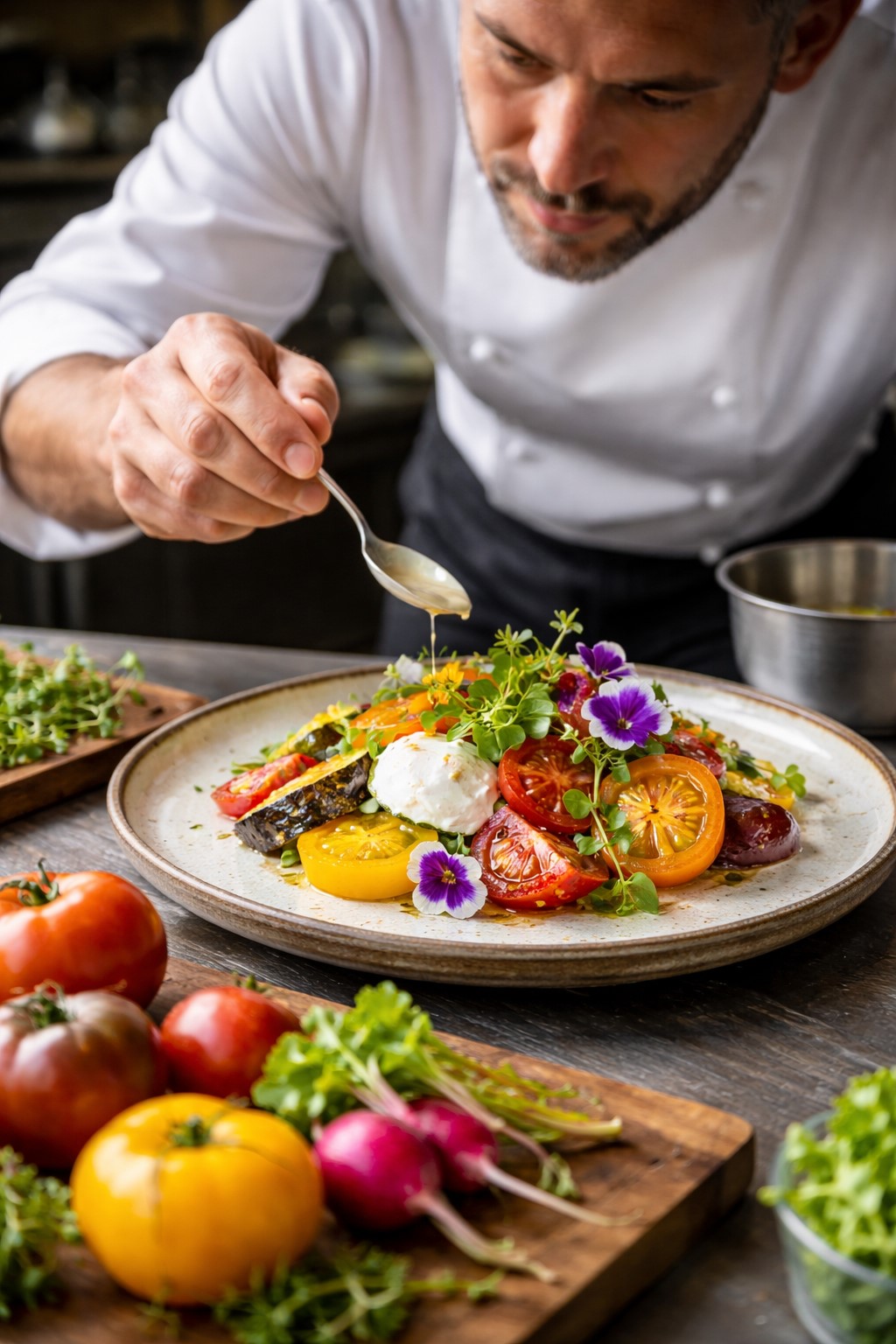
Video moment: chef receiving a farm delivery, immediately tasting and improvising — the creative decision visible in real time.
How to Source Seasonal Ingredients Through LiveStalks
LiveStalks was built for this problem. Instead of calling farms one by one or guessing at what a distributor has left in the warehouse, you can see what's available right now — from farms in your area — and order directly.
Browse current availability. The marketplace shows what each farm has listed today. No outdated catalog, no "sorry, we're out" when the delivery arrives. If it's listed, it's available.
Search by ingredient. Looking for asparagus? Fiddleheads? Wild blueberries? Search by what you need and see which farms have it, at what price, and when they can deliver. Compare farms side by side and order from multiple sources in a single session.
Use wish requests. If you want something that isn't currently listed — a specific squash variety, dried beans in October, extra garlic going into winter — submit a wish request. Farmers see these and use them to inform what they plant next season. It's a direct line from your menu planning to a farmer's seed order.
Message farms directly. Question about a variety? Need a custom quantity or a specific cut? Message the farmer through the app. No middleman on the phone, no voicemail chain.
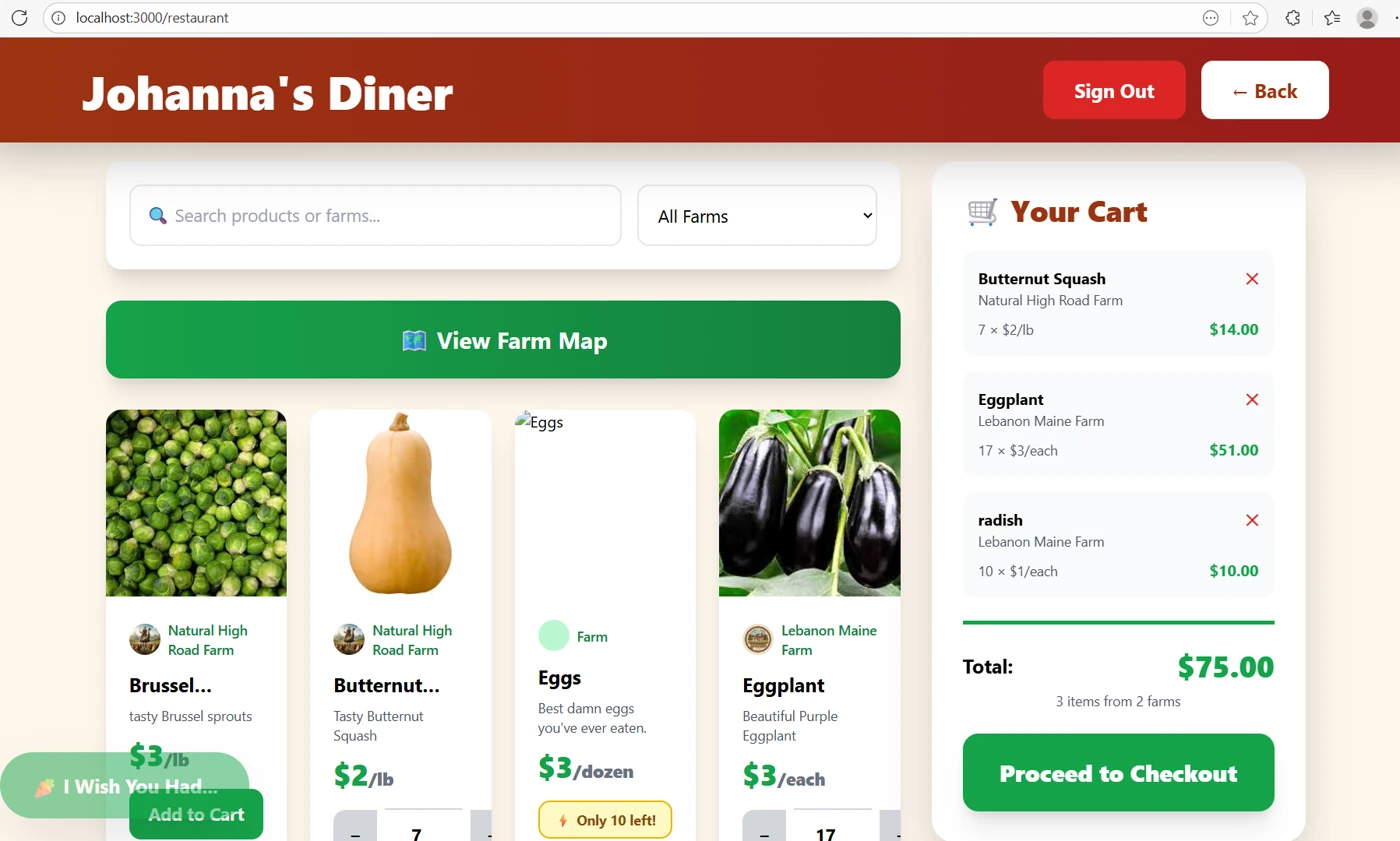
Video moment: chef scrolling the marketplace on a phone, pausing on a wild blueberry listing, placing an order in under a minute.
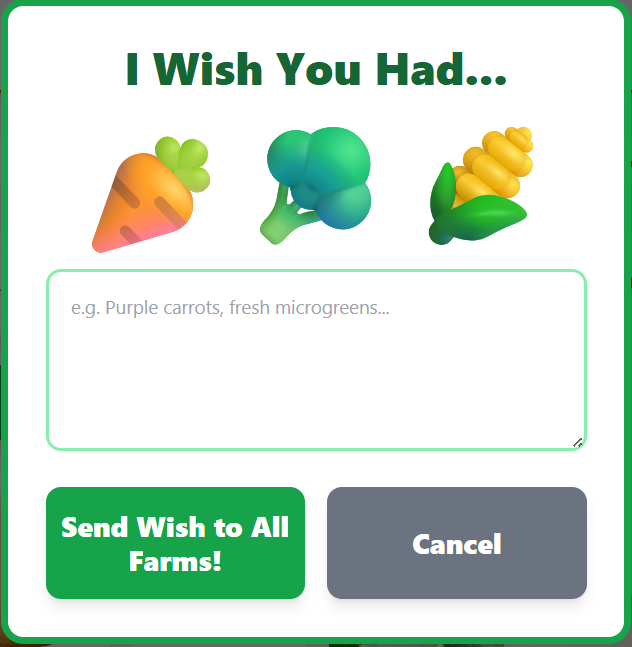
Video moment: chef submitting a wish request; farm owner receiving it and adding it to next season's planting plan.